
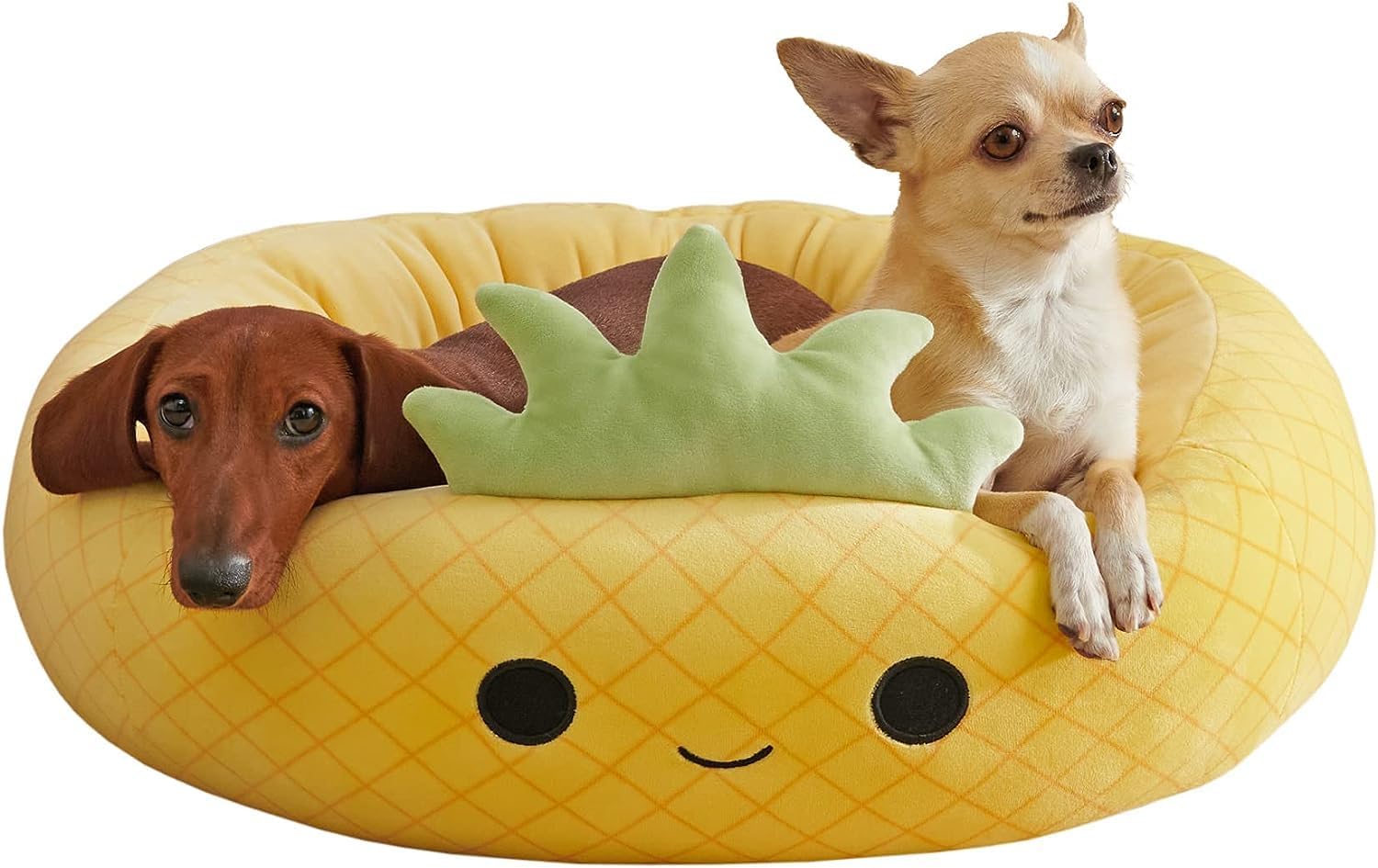
You’re about to spend $30–$60 on a cat bed. The question is: does the Squishmallow premium actually translate into a better experience for your cat — or are you just paying for adorable branding? We break it down across every dimension that matters.
1. Material Comparison: Squishmallow Plush vs. Standard Polyester
Most budget cat beds use basic short-pile polyester — functional but forgettable. Squishmallow cat beds use the exact same marshmallow-textured plush that made the collectible toy line famous. The difference is tactile and immediate: the Squishmallow fabric is notably denser, softer, and bouncier than standard pet bed fabric. It also holds its shape better over time — the polyester fiber fill doesn’t compress flat after a few weeks of use the way cheaper fill does.
- Standard polyester fill: compresses within weeks, loses loft
- Squishmallow marshmallow plush: dense, bouncy, retains shape with regular use
- Winner: Squishmallow — by a significant margin on texture and longevity
2. Design & Aesthetics: Home Décor Value
This is where Squishmallow beds are in a completely different league. Regular cat beds typically come in neutral tones designed to blend in — beige, grey, brown. They succeed at being invisible.
Squishmallow beds feature beloved collectible characters — Gordon the Shark, Cam the Calico Cat, Maui the Pineapple — that have millions of fans worldwide. They’re conversation starters. They’re Instagram fodder. They match existing Squishmallow collections on shelves.
- Regular cat bed: neutral, forgettable, blends in
- Squishmallow bed: statement piece, collectible character, shareable aesthetic
- Winner: Squishmallow — if home décor matters to you at all
3. Comfort & Support: Bolster vs. Flat Beds
Most budget cat beds are flat or lightly padded. They offer no structure, no bolster rim, and no sense of enclosure. Squishmallow bolster beds feature a raised padded rim all the way around the sleeping circle — acting as both a headrest and a security barrier that cats instinctively respond to.
- Flat beds: no bolster support, no security feeling, cats often don’t use them
- Squishmallow bolster beds: raised rim creates security, headrest function, better cat adoption rates
- Winner: Squishmallow — especially for anxious, shy, or senior cats
4. Price Point: Is the Premium Worth It?
Let’s be honest about price. A typical cat bed costs $15–$25. A Squishmallow cat bed runs $35–$60 depending on size and character. Here’s how to think about whether the premium is justified:
- If your cat has ignored multiple cheap beds: the higher adoption rate of the Squishmallow plush fabric makes the premium worth it
- If you care about home décor: a $45 statement piece that doubles as cat furniture is excellent value
- If you’re a Squishmallows collector: matching your cat’s bed to your collection is priceless
- If you just need a basic sleep spot: a standard bed might suffice
Real-world data: multiple verified buyers report cats ignoring every previous bed they ever bought, then immediately adopting the Squishmallow bed.
5. Verdict: Who Should Choose Squishmallow?
Here’s a simple decision framework:
- Choose Squishmallow if: your cat has ignored past beds, you value aesthetics, you have an anxious/rescue cat, or you’re already a Squishmallow fan
- Stick with standard if: you need a temporary solution, you’re on a very tight budget, or your cat is already happy with what they have
Related Posts: